

 Lana & Me: Meetings with Remarkable Apes
By Dr. Susan Block


Deni Béchard
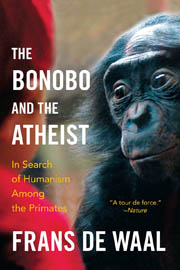 Frans de Waal
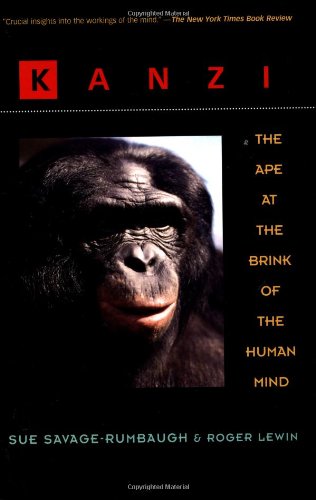 Sue Savage-Rumbaugh

Authors & Primatologists
Alan Dixson
Albert Lokasola
Amy Parish
Brian Hare
Cacilda Jethá
Christopher Ryan
Claudine André
Dale Peterson
Deni Béchard
E. O. Wilson
Edward Large
Frans de Waal
Frances J. White
Gottfried Hohmann
Harry Prosen
Isabel Behncke
Itai Roffman
James Rilling
Jane Goodall
Jeroen Stevens
Jingzhi Tan
John Mitani
Karl Ammann
Klaus Zuberbühler
Michael Hurley
Natalie Angier
Patricia Gray
Richard Wrangham
Robert Yerkes
Sally Jewell Coxe
Sue Savage-Rumbaugh
Takayoshi Kanõ
Tony Rose
Vanessa Woods
Verena Behringer
Zanna Clay
Block Bonobo Foundation
A project of The Dr. Susan Block Institute and Bonoboville
to study and help save the bonobos from extinction and promote the Bonobo Way

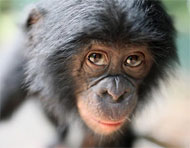
Deep in the heart of the hot, wet African rainforest, there lives a tribe of peacemakers who share a multiplicity of pleasures and make a very special kind of love. Here, in the midst of war-ravaged territory in the Democratic Republic of Congo, lies this lush and steamy jungle paradise, the only natural habitat of the bonobo.
If you don’t know bonobos from bananas, please allow me to introduce you to the long-lost kissing cousins you never knew you had, a rather recently revealed branch of your hominid family tree. Meet the bonobos, the rare and marvelous “make love not war” great apes who swing through the trees as well as with each other. If you’re already a fellow bonobo lover, welcome! You probably know that bonobos are very sexy beasts who share close to 99% of our genes.
They’re also very smart in human terms. Some bonobos raised by people communicate with their caretakers through sign language and computer lexigrams, cook hot dogs on campfires they’ve built themselves and even beat (human) journalists at video games, as well as play practical jokes on them.
Bonobos Make Peace through Pleasure
And then there’s the sex. If you know anything about bonobos, you probably know they have a lot of sex. And they have it in a dazzling array of ways. These loving, sensuous apes have as many kinds of sex as humans do, in a veritable Bonobo Sutra of positions, including face-to-face, with multiple partners and in all combinations, as bonobos are bisexual or pansexual, an especially fitting adjective since their Latin name is Pan paniscus.
But it’s not just how they have sex that makes bonobos so important, especially to humans. It’s how they use sex: for barter, friendship, stress-relief, anger management, conflict resolution and even political positioning that allows the females to gently dominate the males, and to prevent murder and war in their communities. That’s right, no bonobo has ever been seen killing another bonobo in the wild or in captivity. Their uncanny ability to make “peace through pleasure” is intrinsically related to their sexuality.
A New Great Ape Paradigm for Humanity
Recent bonobo studies (and they’re all pretty recent) reveal tremendous insights about the nature of lust, trust, arousal, orgasm, cooperation, compassion, intimacy, morality, the motivation for charity, just being human, and even being humane, as well as our place on this wild and very sexual planet earth, and even within this 13.8 billion-year-old cosmos. Understanding human closeness to the bonobos connects us more deeply to all of nature as well as to the better “bonoboësque” side of “human nature.”
Of course, that includes our sexual nature. As a sex therapist, when I first saw bonobos, I wondered: What do these great apes know about sex—and the rest of life—that we don’t? It took me a book to even attempt to address that question! The Bonobo Way explores the very special world of these amazing creatures who have so much sex, never kill each other, empower the females and maybe have something to teach us about how we too might live in a sex-affirming society without murder or war.
The bonobo provides an exciting new primate paradigm for humanity that could make the world a more peaceful, egalitarian, sustainable—and sexier—place for all of us. Experts have long used the “killer ape” behavioral paradigms of common chimps to account for the prevalence of violent behavior among humans, suggesting that war is wired into our genes, that people innately love to rape, pillage, bomb and behead each other, and always will. Common chimp and baboon studies, along with apocalyptic killer ape movies, reveal important aspects of human nature that seem to support the mounting horrors we see in the media, but does that tell us the whole story?
No, it certainly does not. We humans are at least as genetically close to the passionate, compassion bonobos as we are to the mad chimpanzees, and much closer than we are to those bloodthirsty baboons. Obviously, humanity has its murderous, militaristic, common chimpish side. But what might happen if enough of us “released our inner bonobos” and reoriented ourselves toward our better, peace-through-pleasure-loving nature? How can we possibly make that work in our war-torn world? Learning about—and from—the bonobos themselves is a start.
Save the Bonobos! They Will Reciprocate & Help "Save" Us!
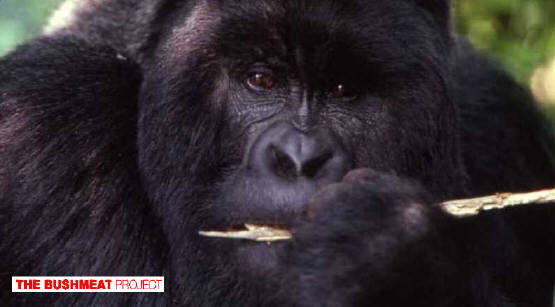
The tragic irony is that just as many of us are discovering and learning so much about our kissing cousins, we are coming very close to losing them, and part of ourselves, forever. Indeed, as soon as humans discovered bonobos, other humans were already beginning to destroy their protective rainforest paradise. Human wars, logging and mining all take their toll. But the worst, most immediate, lethal danger to wild bonobos is “bushmeat” poaching. That is, not only is human commerce destroying their natural habitat; but human hunters are literally killing bonobos one by one, sometimes slaughtering a whole tribe in one bloodbath.
The current risk of extinction for bonobos is extremely high according to the International Union for Conservation of Nature (IUCN) Red List and the lists of every other conservation organization. The estimates on how many bonobos are left vary considerably, but at most, there are less than 10,000-50,000 bonobos in the wild, as opposed to 170,000-300,000 common chimpanzees, plus the few hundred scattered around zoos, sanctuaries and primate centers throughout the world, compared with several thousand captive chimps.
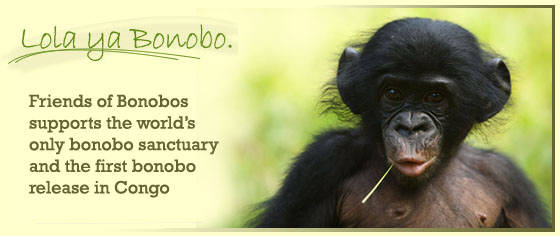
Despite the grim situation, hope is on the rainforest horizon in the form of some hard-working, visionary conservationists, several of whom are listed on this site. Block Bonobo Foundation supports the important work of Lola ya Bonobo, the Bonobo Conservation Initiative and other organizations linked on this page, and we urge you to do so too. Help the bonobos and your love life will improve, if for no other reason than the erotic “glow” you’ll get from knowing you did something good, supporting a cause that’s both right and sexy.
Peace through pleasure,
Susan Block, Ph.D.

Where You Can Help
Here are some places where you can donate to help save the bonobos:
Bonobo Conservation Initiative
African Wildlife Foundation (AWF)
City of Joy: Power to Women and Girls of the Democratic Republic of Congo
Block Bonobo Foundation, in conjunction with the Dr. Susan Block Institute and Bonoboville, is dedicated to protecting, promoting and studying bonobo apes, as well as educating people in the Bonobo Way. To find out more about the Block Institute and Block Bonobo Foundation, call us anytime at 310.568.0066 or contact us through the form above.
Where You Can See Bonobos around the World
United Kingdom: | Twycross Zoo: World Primate Centre | North America: Columbus, OH: The Columbus Zoo | San Diego, CA: San Diego Zoo (See Lana and her mates here!) | Cincinnati, OH: Cincinnati Zoo | Jacksonville, FL: Jacksonville Zoo | Des Moines, Iowa: Bonobo Hope Sanctuary | Fort Worth, TX: Fort Worth Zoo | Memphis, TN: Memphis Zoo | Milwaukee, WI: Bonobo Conservation | Mexico: Parque Zoologico Benito Juarez | Europe: Planckendael/Antwerp, Netherlands: Netherlands Zoo | Europe Collaborative: European Association of Zoos and Aquarium | Berlin, Germany: Zoo Berlin | Cologne, Germany: Kolner Zoo | Belgium: Apen Heul | Frankfurt, Germany: Zoo Frankfurt | Leipzig, Germany: Zoo Leipzig | Stuttgart, Germany: Wilhelma Zoo | Congo: Kokolopori: Kokolopori Reserve | Les Petites Chutes de la Lukaya: Lola Ya Bonobo | Kinshasa: Bonobo Congo and Biodiversity Initiative

Coming Soon: Dr. Susan Block’s exciting new book The Bonobo Way!
Is your sex life 8 minutes of unimaginative boredom?
Is your professional life 8 hours of unrewarding tedium?
Take a stroll from the lush depths of the Congo rainforests to the satin sheets of your own bedroom. Let international sex educator, best-selling author, HBO personality and horny housewife, Dr. Susan Block help you “go bonobos” through a VERY different kind of “12-Step Program” that will energize all facets of your life.
Get More Than 8 Minutes! Get It Now

Join Bonoboville: Social Media Grown Up
Looking for a different kind of online community that embraces the sex-affirming philosophy inspired by the bonobos? Join us in Bonoboville, our new online community of ethical hedonists, friends and lovers.

Surround Yourself with Good!




By Dr. Susan Block
By Vanessa Woods
By Frans De Waal

By Frans De Waal

By Richard Wrangham
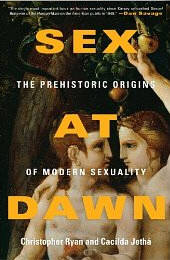
By Christopher Ryan
& Cacilda Jeth
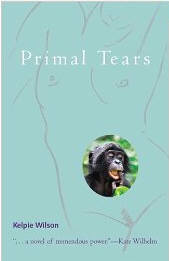
By Kelpie Wilson
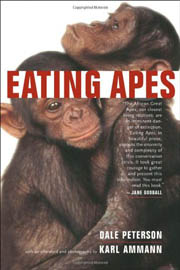 Dale Peterson


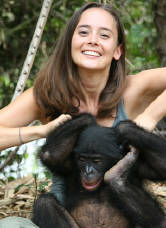
The Block Bonobo Foundation is a not for profit private project of Dr. Susan Block & Pr. Maximillian Lobkowicz.